Jumping Spider Camera Systems
This work covers two generations of multi-camera infrastructure built to support jumping spider locomotion research at Terradynamics Lab, where hunting behavior can run for hours and can't be feasibly monitored live. The first generation used six Raspberry Pis running twelve cameras with a custom motion-detection pipeline; solving a real system bottleneck improved its sustained throughput by over 13 times. The current generation is a 28-camera machine vision system, built around a custom high-performance workstation and a simplified network synchronization approach.
Generation 1: Multi-Raspberry Pi System
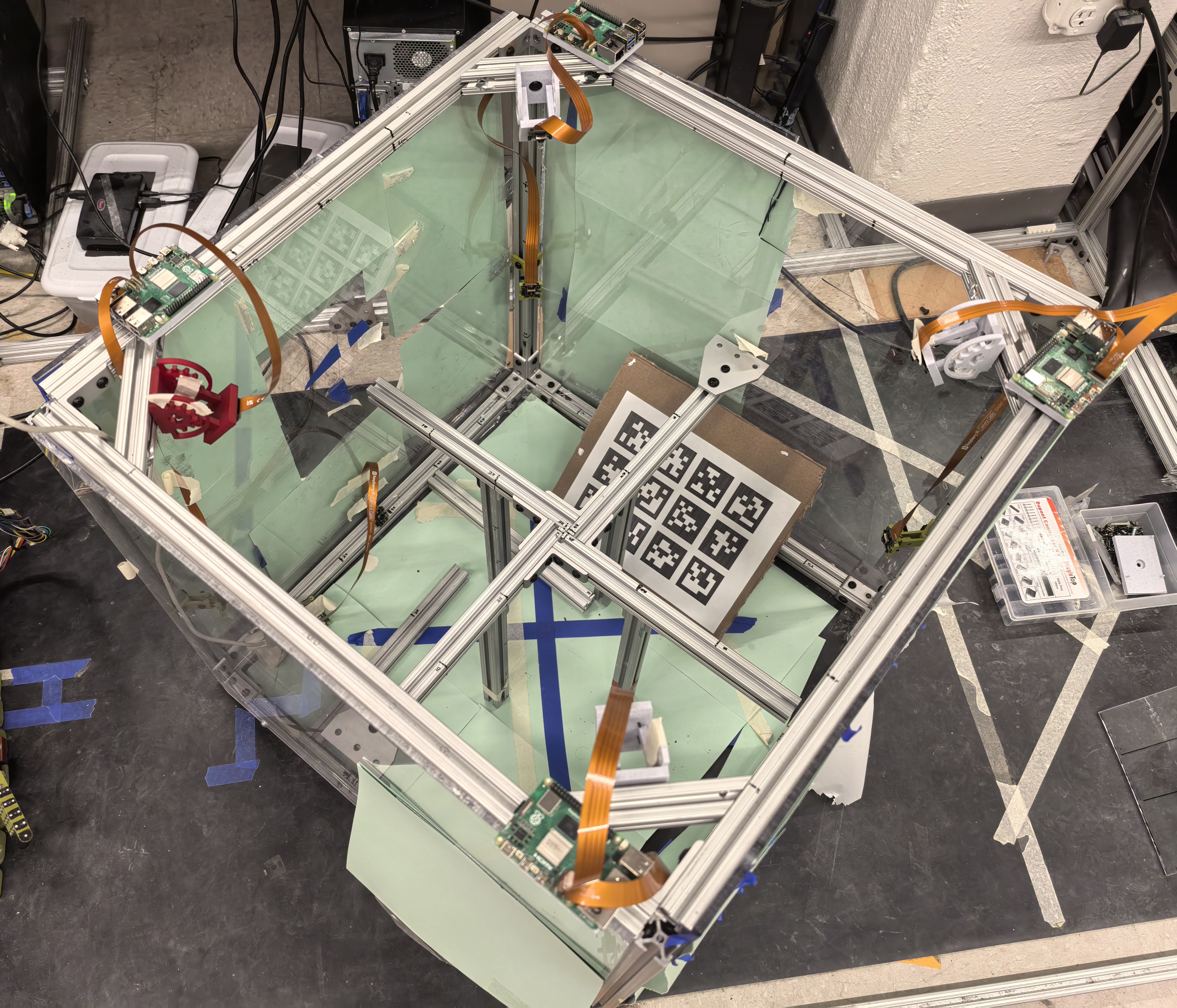
- Six Raspberry Pis, each running two cameras, with motion-triggered recording controlled remotely from a central interface over SSH
- Each Pi ran parallel capture and motion-detection threads per camera, using frame differencing to trigger recording only when motion occurred
- Systematic testing across resolution and frame-rate combinations identified the real bottleneck: sustained SD card write throughput, not CPU or the threading model itself
Solving Real Bottlenecks
- Removed a redundant full-resolution frame copy in the processing path that was needlessly duplicating over 30MB of memory per frame
- Moved a background video re-encoding step off the main detection thread so it no longer blocked capture while finalizing a recording
- Tuned internal buffer capacity to absorb short bursts of frames without dropping them
- Together, these changes improved sustained throughput from roughly 2 FPS to as high as 27 FPS, a 13.5 times improvement, ultimately limited by SD card write speed rather than processing power
Generation 2: 28-Camera LUCID System
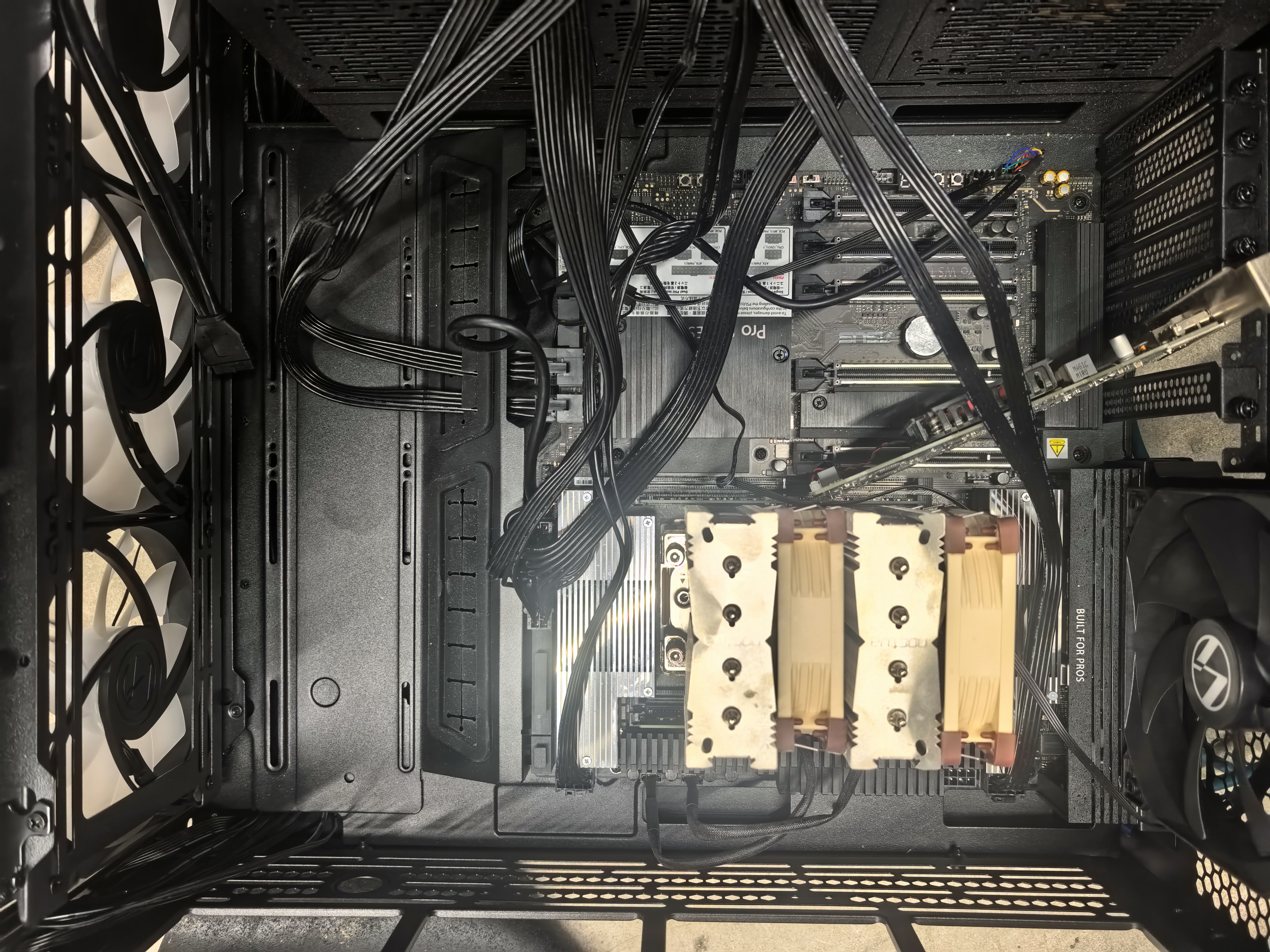
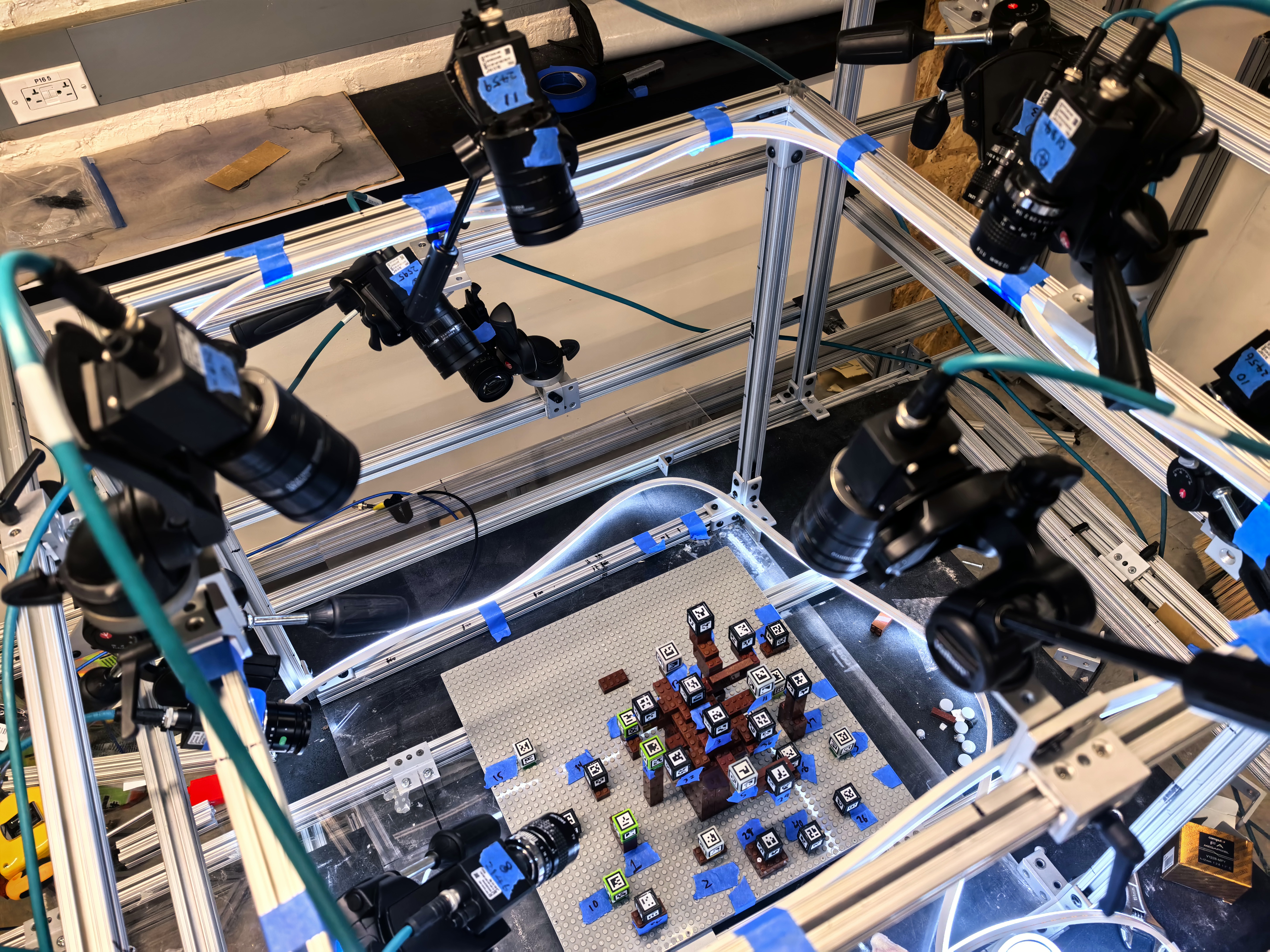
- Built a custom AMD Threadripper workstation to drive a 28-camera machine vision array, after briefly exploring a from-scratch GigE camera build before settling on a commercial system
- Solved real hardware problems during the build: RAM compatibility requirements, GPU selection, and a full motherboard replacement after a burn-smell incident
- Camera synchronization uses the system's own software-based timing protocol, avoiding the need for specialized network hardware
- Physically mounted the camera array on aluminum extrusion and built the spider arena used for research