SkyCatcher
Annular-Structured UAV for Grasping and Delivery
SkyCatcher is an annular-shaped retractable quadrotor UAV designed for cargo transportation, built solo across my sophomore summer and junior year (2023 to 2024). Unlike conventional morphing quadrotors with complex platforms and difficult control dynamics, SkyCatcher distributes all components around the outer ring, leaving a spacious circular center for package transport. An innovative single-servo mechanism achieves transformation across two degrees of freedom, letting the drone shrink to navigate through gaps as narrow as 28.4cm. On the controls side, a feedforward PID algorithm combined with Model Predictive Control enables precise trajectory tracking, while a SLAM algorithm lets the drone map its surroundings, avoid obstacles, and deliver objects to precise locations autonomously, making it particularly effective indoors. The project spans mechanical design, electrical system design, custom PCB design, and software tuning across three hardware iterations, validated through experiments under progressively stringent conditions. SkyCatcher placed 4th at ISEF 2024.
Highlights
Single-Actuator Transformation
- One servo motor drives a full 2-DOF morphing mechanism
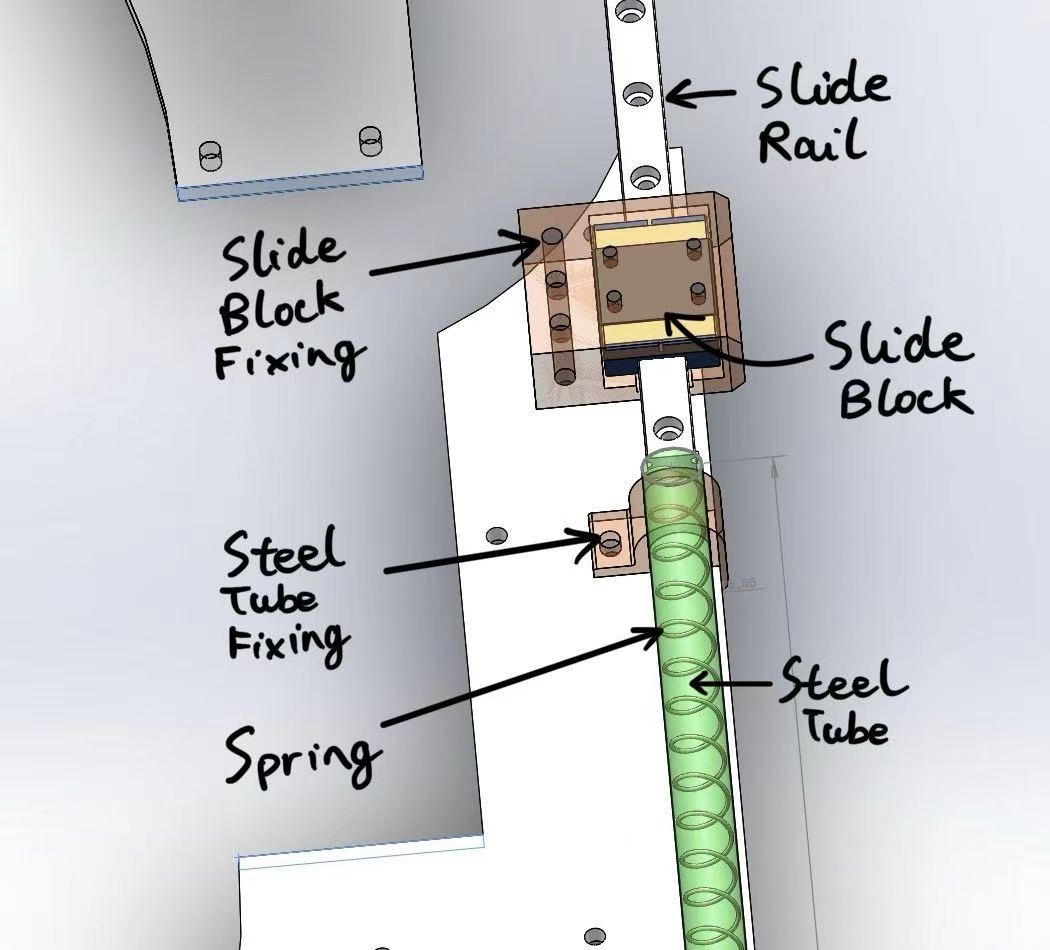
- Springs, slide rails, and a pulley-and-string retraction system pull all four corners inward simultaneously
- No extra motors, no added weight
Full Autonomy Stack
- LiDAR SLAM, modified Cartographer with a custom Lazy Decision algorithm for feature-poor warehouse environments
- Dijkstra global planning
- TEB local planning for real-time obstacle avoidance
Custom Flight Electronics
- Flight controller PCB designed from schematic to Gerber files in EasyEDA
- STM32F407VET6 microcontroller, BMI088 IMU, AK8975 compass, SPL06 barometer
- Built with mentorship on the electronics side
Validated Real-World Performance
- Mapped a 2,000 square meter mall floor with 2 percent accumulation error
- Shrank to 28.4cm to pass through vertical openings
- Autonomously located and retrieved a target object using its full sense-plan-act pipeline
Prototype Evolution
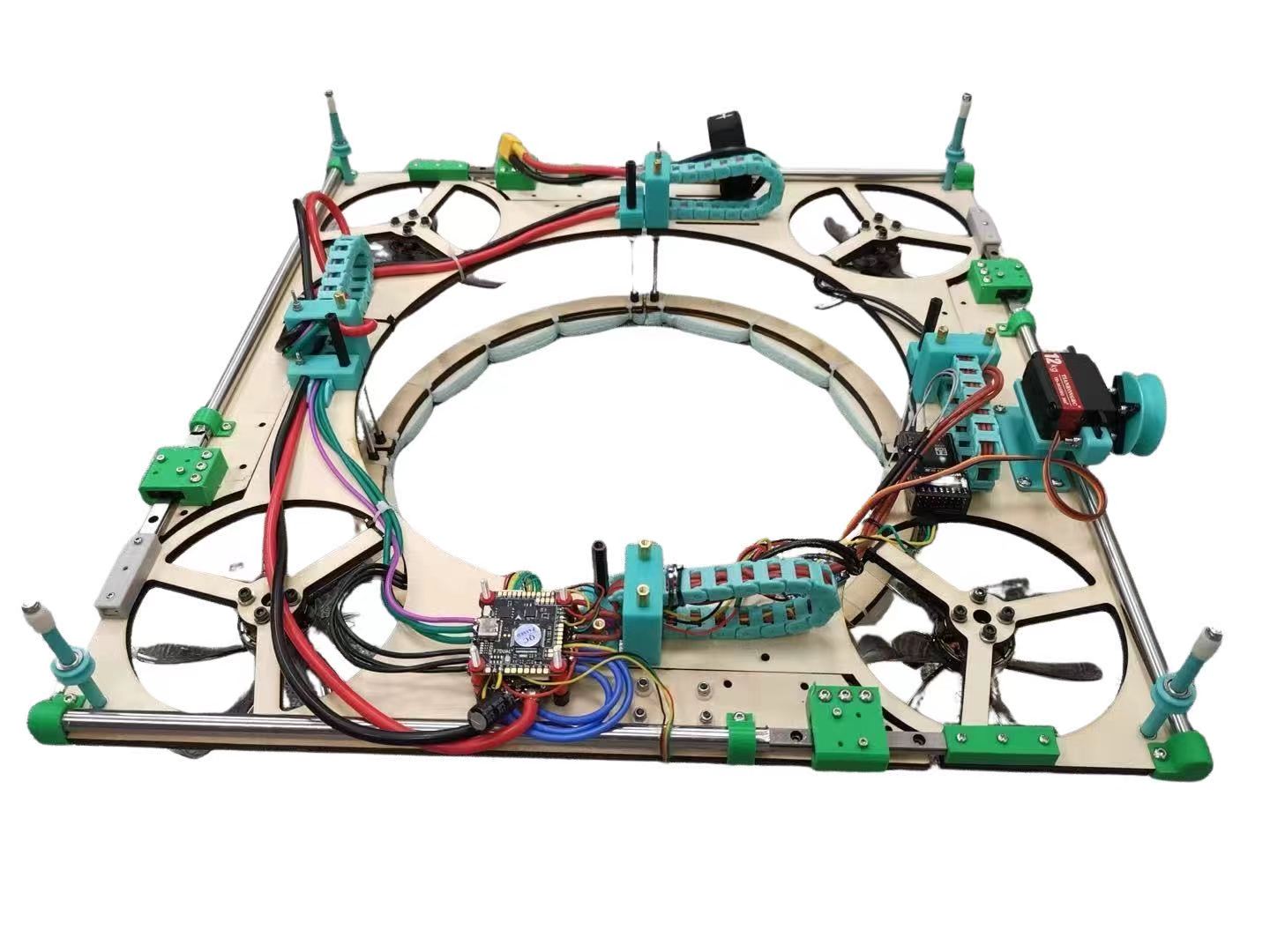
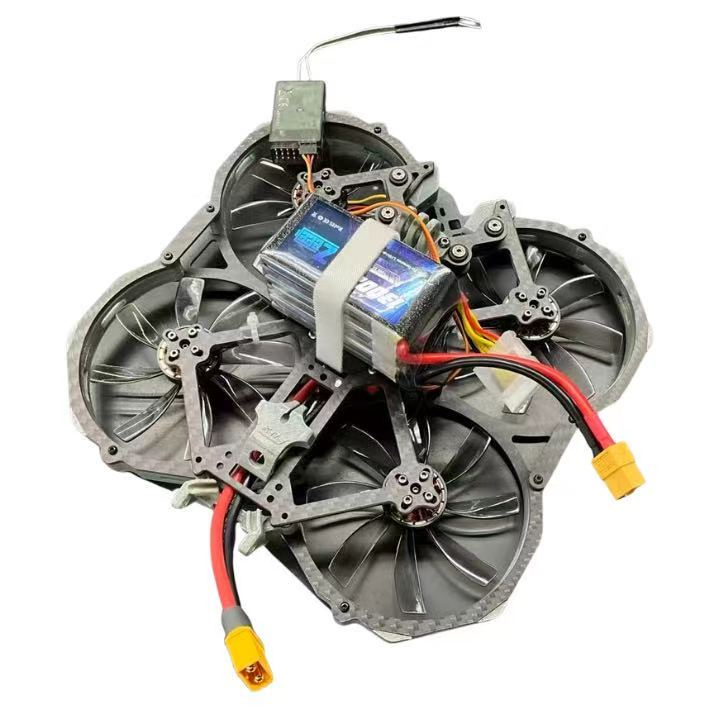
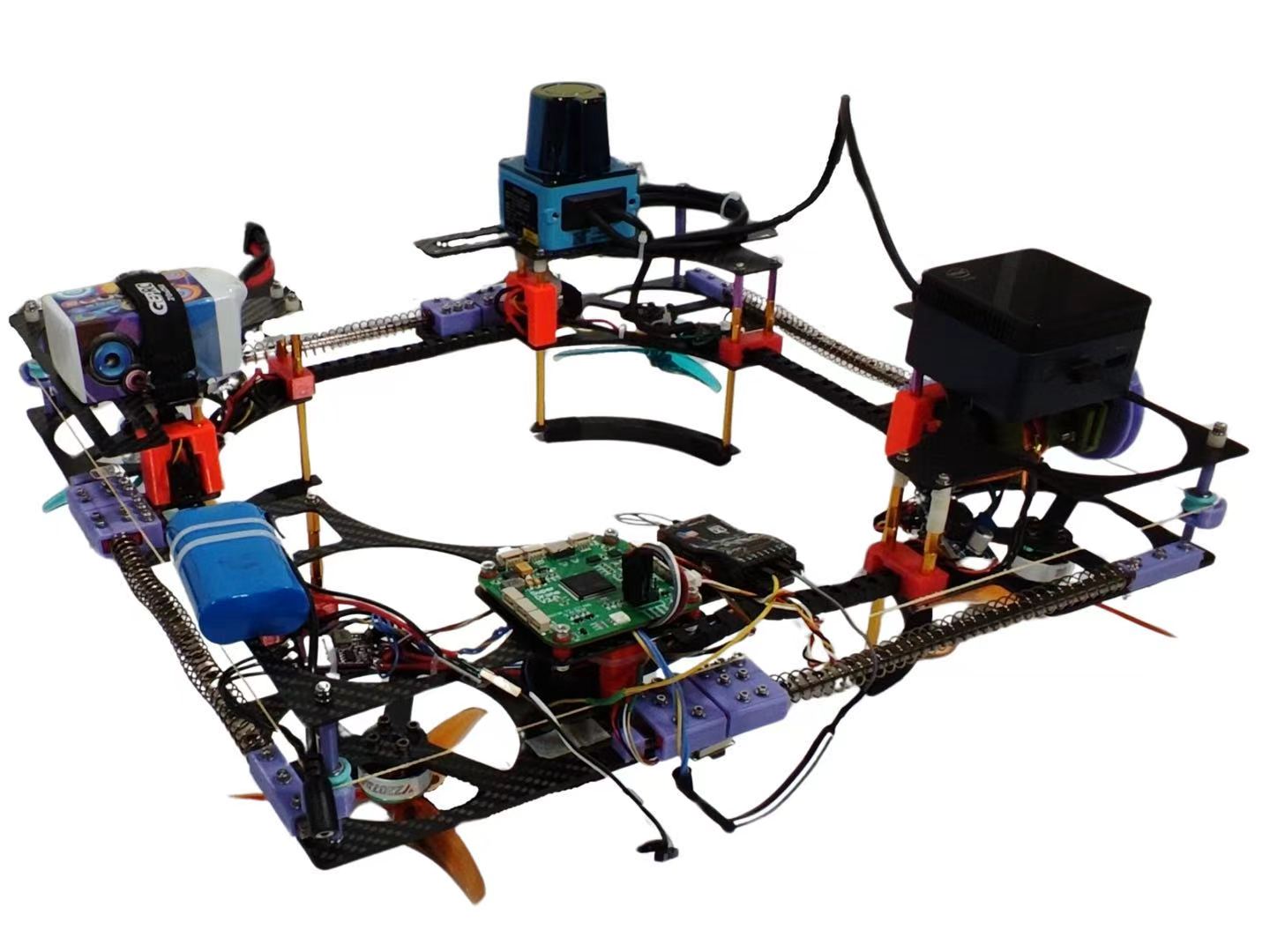
Three build iterations, each isolating a different challenge: a minimal viable drone to validate transformation and flight, an algorithm-testing rig for controller tuning, and a fully-enabled final version with SLAM, trajectory planning, and a 46 percent smaller footprint.
Mechanism Design
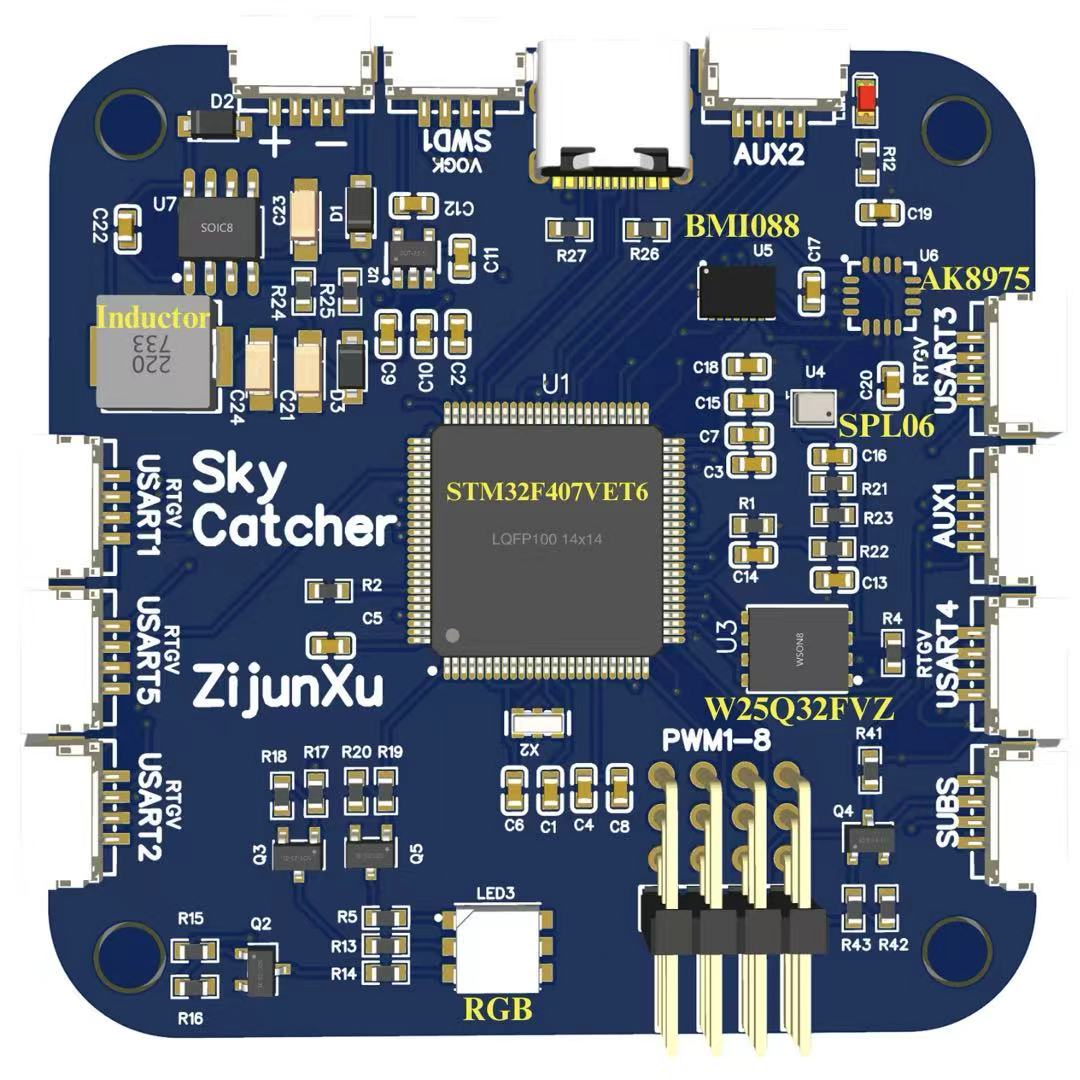
Controls and Navigation
Sensor Fusion and Control Loop
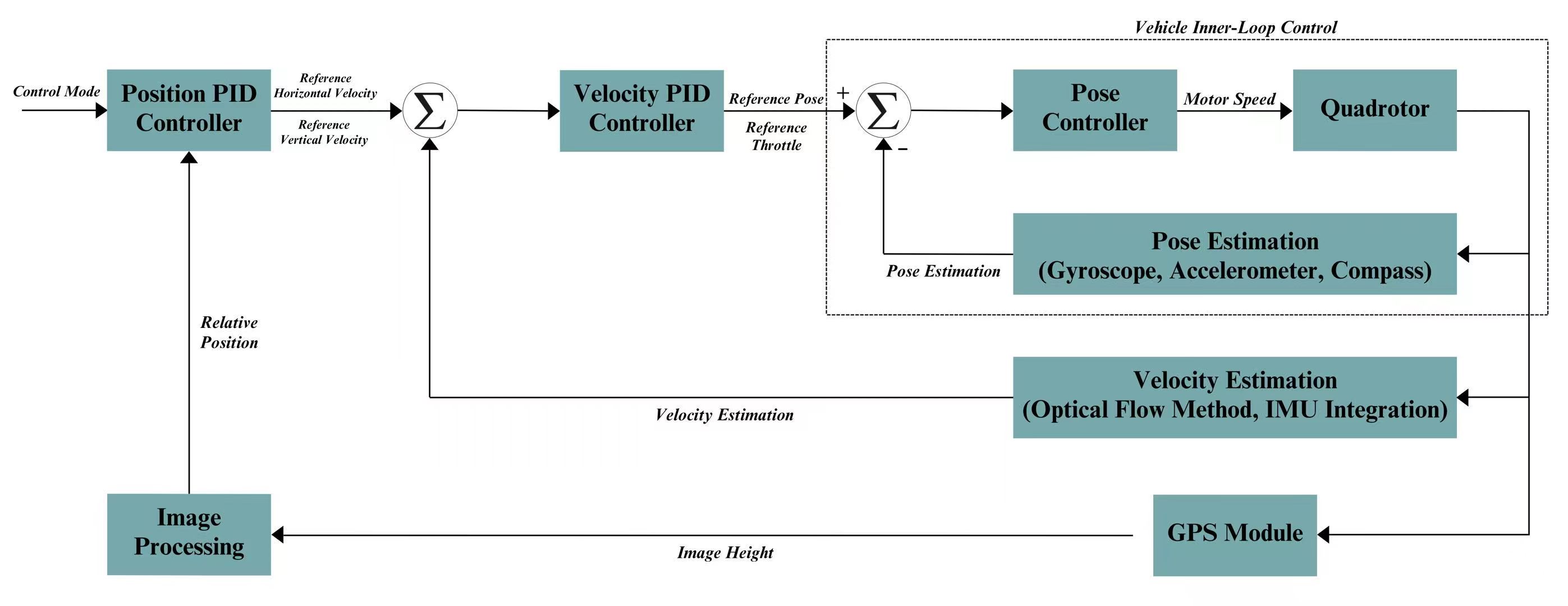
A feedforward PID loop preemptively compensates for disturbances rather than reacting after the fact, fused with GPS, optical flow, and IMU data, each sensor covering the others' blind spots.
SLAM and Path Planning
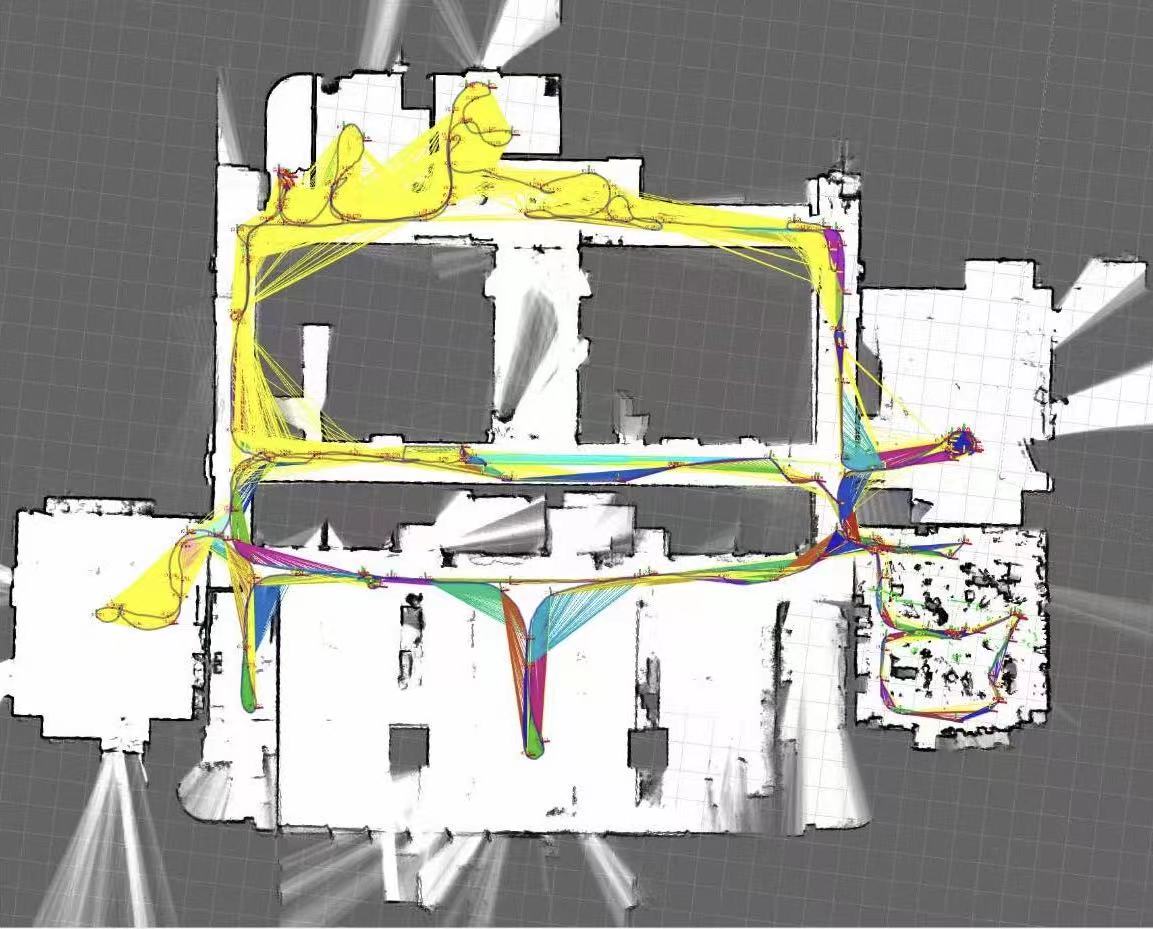
LiDAR SLAM mapped a real warehouse environment in real time. A Lazy Decision algorithm reduced loop-closure errors in feature-sparse spaces. Dijkstra found globally optimal paths while TEB handled real-time local obstacle avoidance.