The Roaring Phoenix
Autonomous 1/10-Scale Racecar for F1Tenth
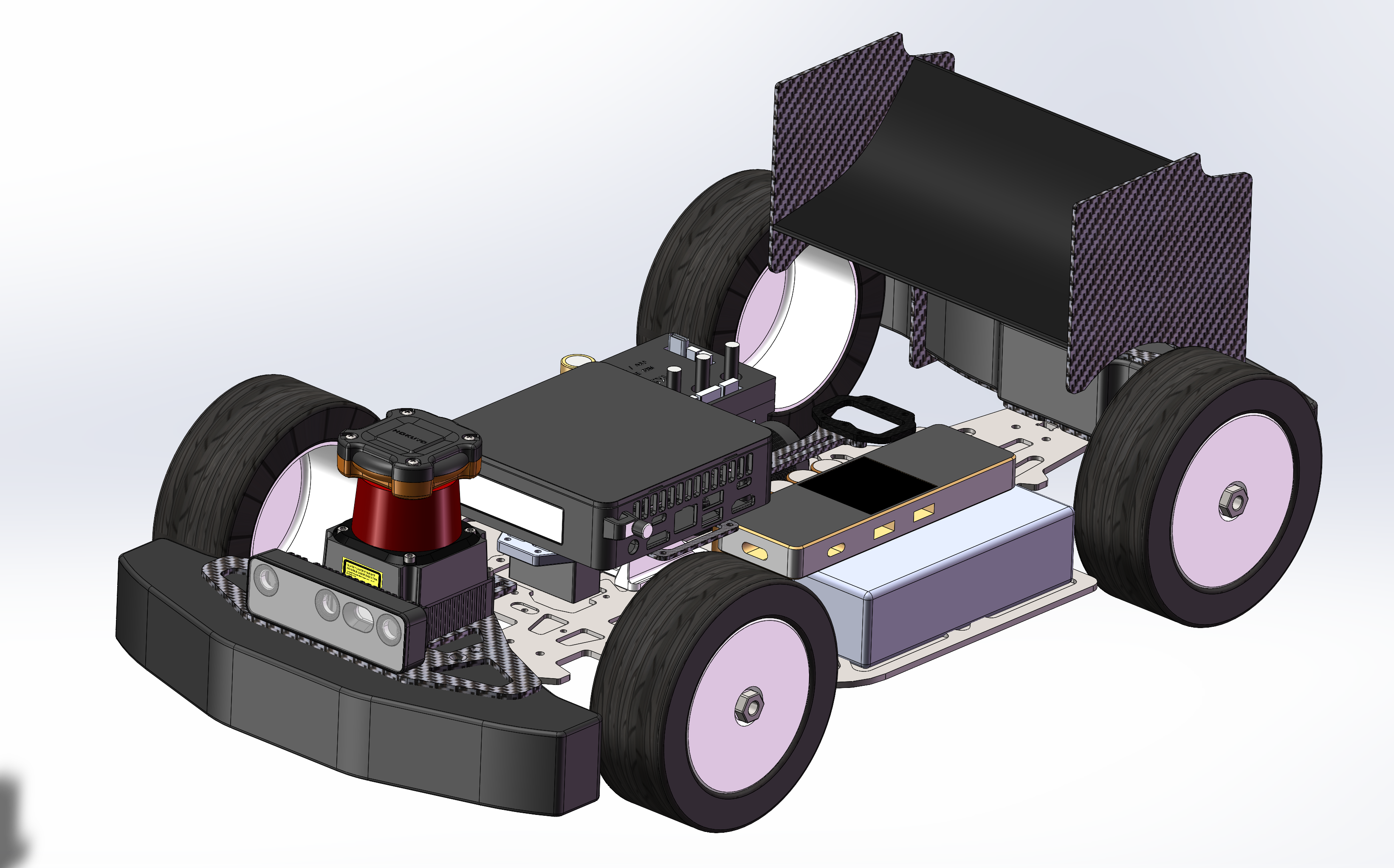
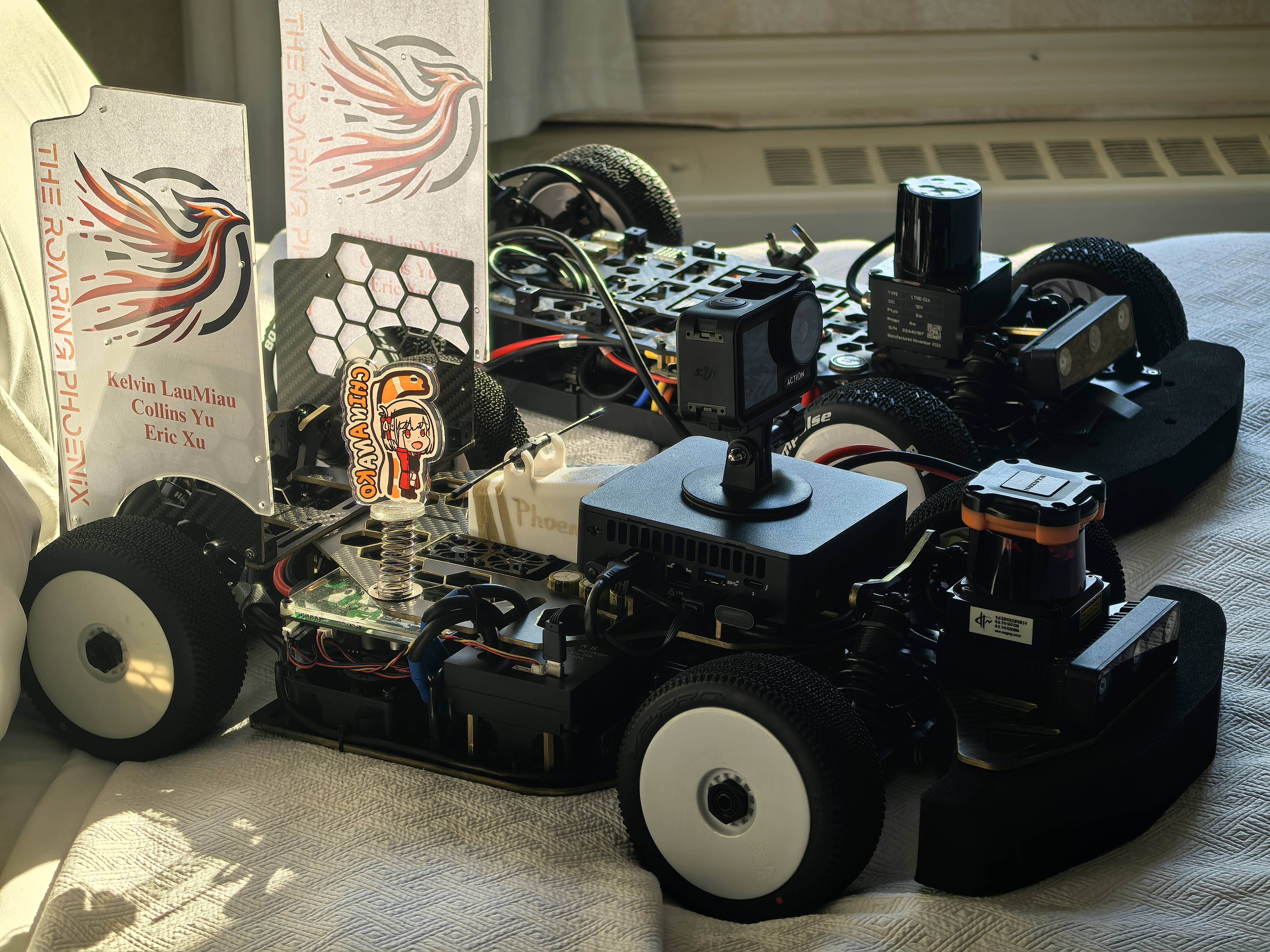
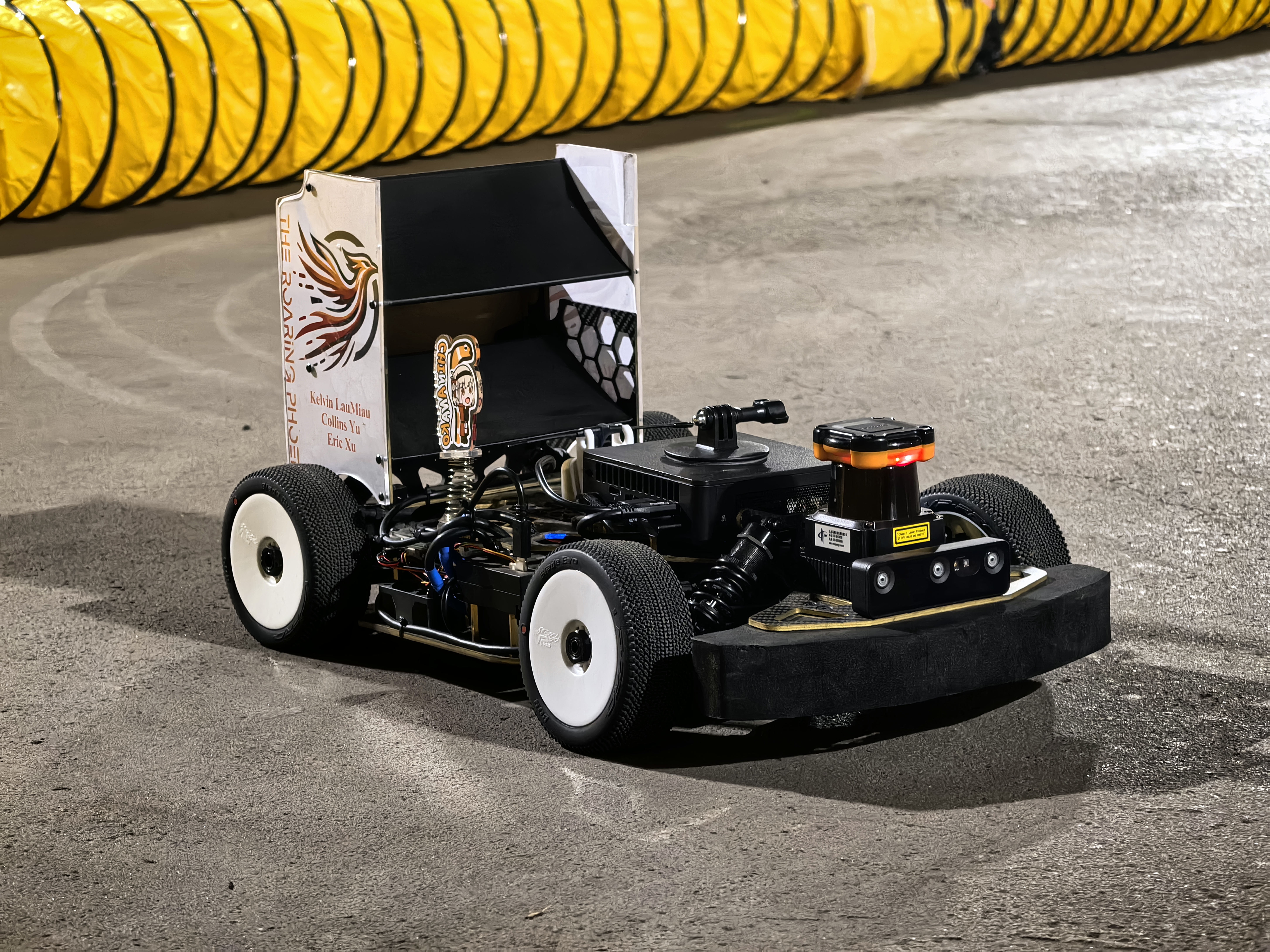
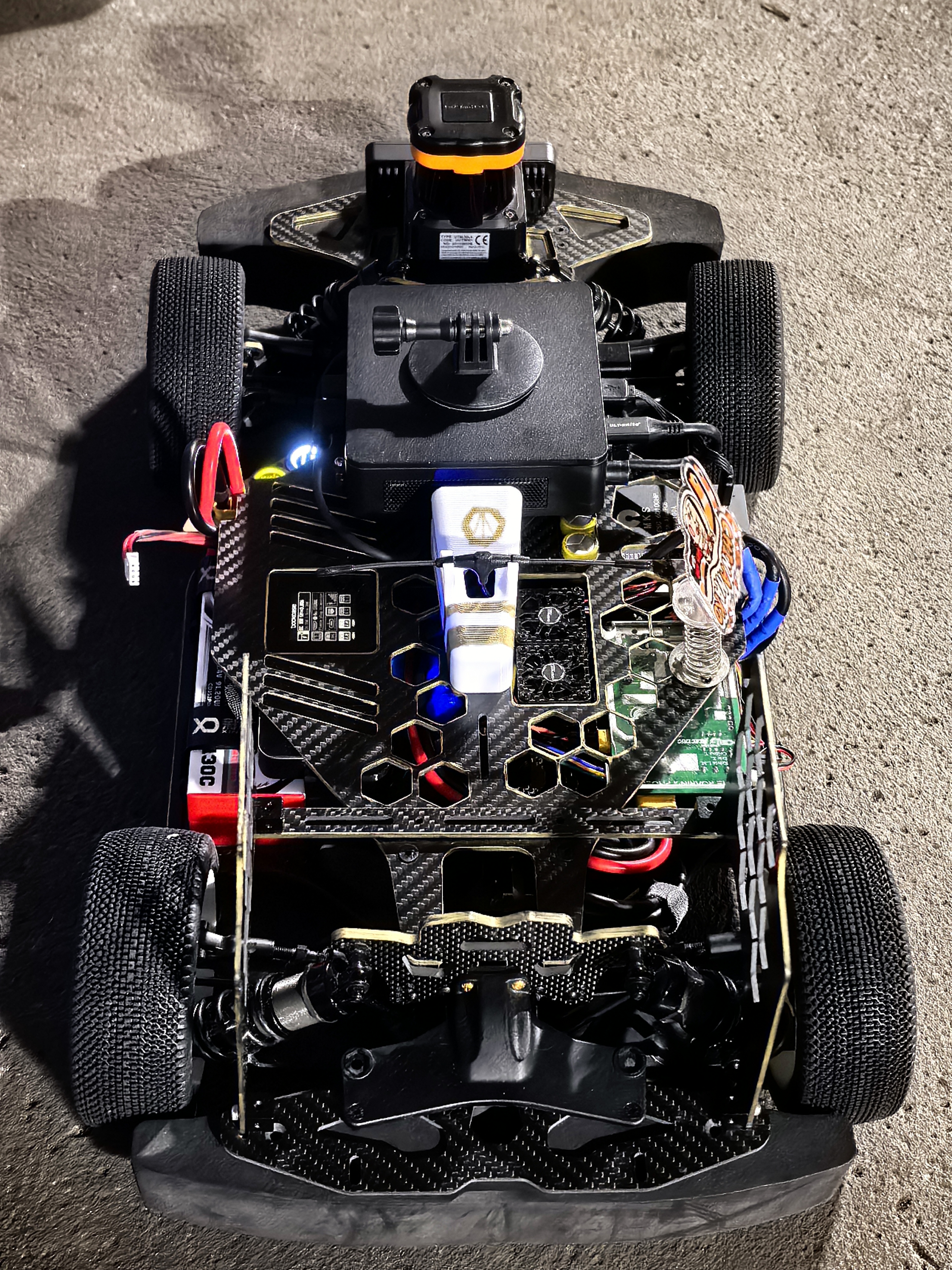
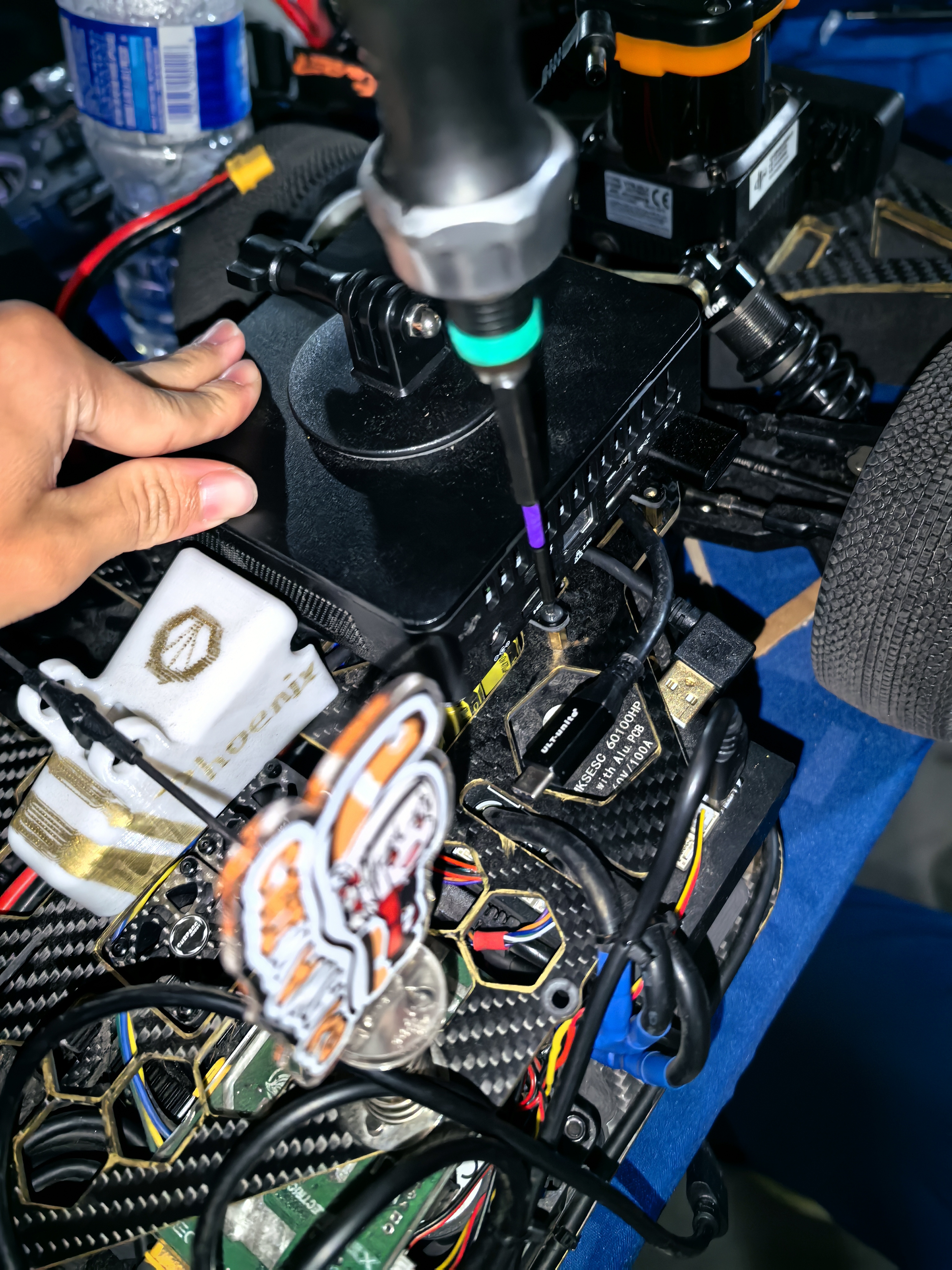
The Roaring Phoenix is a self-built autonomous racing platform developed for F1Tenth, an international competition where 1/10-scale vehicles equipped with LiDAR race autonomously, testing perception, planning, and control on real hardware. Rather than using the official competition chassis, the team adapted a larger, more capable platform within competition rules, fully 3D modeling the car before building it to ensure every component fit within the tight space constraints. A custom-designed power distribution board handles battery protection, voltage regulation, and isolated signal control across the vehicle's onboard computer, servo, and LiDAR. Autonomous navigation runs on LiDAR-based SLAM mapping and a Pure Pursuit path-tracking algorithm. Competing at IEEE SM F1Tenth 2024 as the only high school team among 12 international university teams, the car placed 3rd overall and posted the 2nd fastest lap time in the competition, built for roughly $2000 per car, less than half the cost of the official competition chassis kit.
Chassis and Mechanical Design
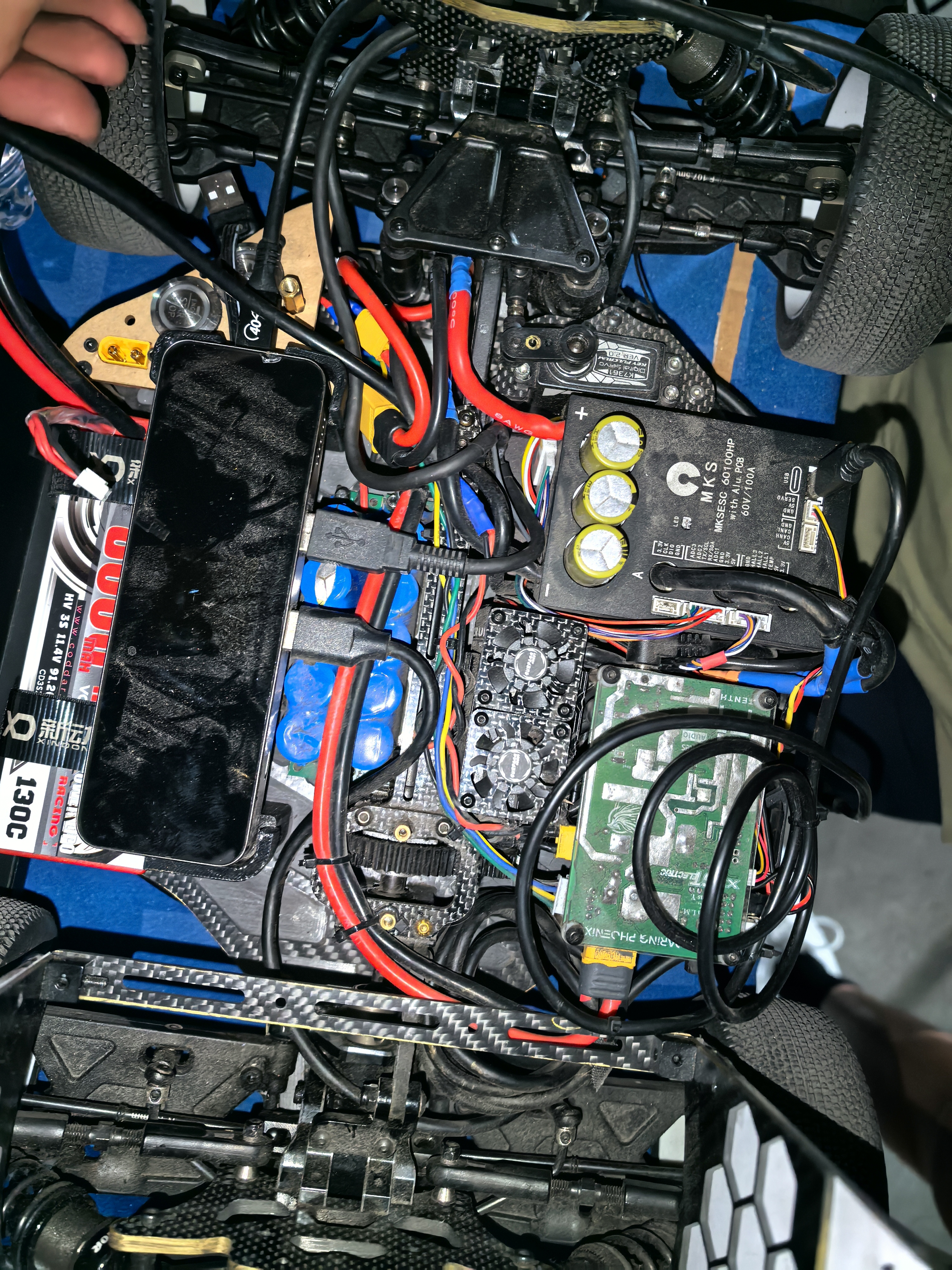
- Adapted a larger, more capable chassis platform within competition rules, rather than using the standard competition-provided chassis
- Fully 3D modeled the entire vehicle before building it, to confirm every component would fit within tight space constraints
- Custom carbon fiber structural components replaced multiple stock mechanical parts, from support pieces to the vehicle's base platform
- Built for approximately $2000 per car, less than half the cost of the official competition chassis kit ($5000)
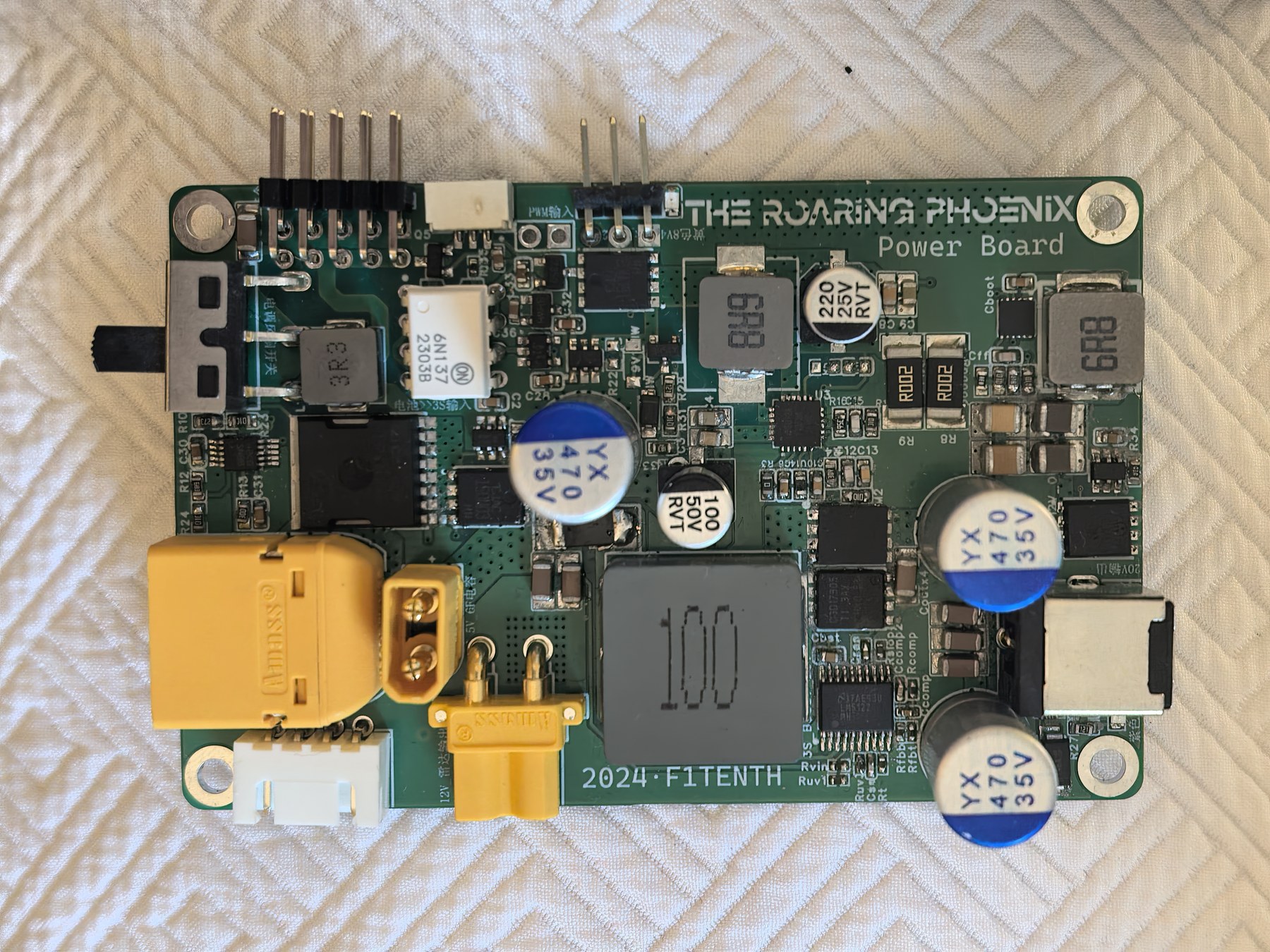
Custom Power Distribution Board
- Battery input protected by an LM5069 MOSFET switch with undervoltage lockout, preventing operation outside a safe input voltage range
- Reverse-current protection on both the main battery line and the servo supply line, using ideal-diode controllers to prevent current from flowing backward into the battery
- A 13.5V, 6F supercapacitor buffer prevents voltage sag during high current draw, such as heavy servo use
- Servo control signal runs through optocoupler isolation, protecting the onboard computer from electrical noise or faults on the servo side
- Three dedicated DC-DC converters power the vehicle's major subsystems: a boost converter steps the battery voltage up to 20V at 10A for the onboard computer, a buck converter steps down to 8.4V at 4A for the servo, and a second buck converter steps 20V down to 12V at 5A for the LiDAR
- Adapted an open-source reference design, modifying undervoltage lockout thresholds and adding input filtering to support both 3S and 4S battery configurations
Motor and Actuator Selection
- Selected a sensored brushless motor after testing against a sensorless alternative
- Sensored motors showed a clear advantage at startup, reaching speed 50 to 200 milliseconds faster from a standstill, with no meaningful difference at higher speeds
- BLDC commutation mode proved more responsive than FOC mode for this application
Autonomous Navigation
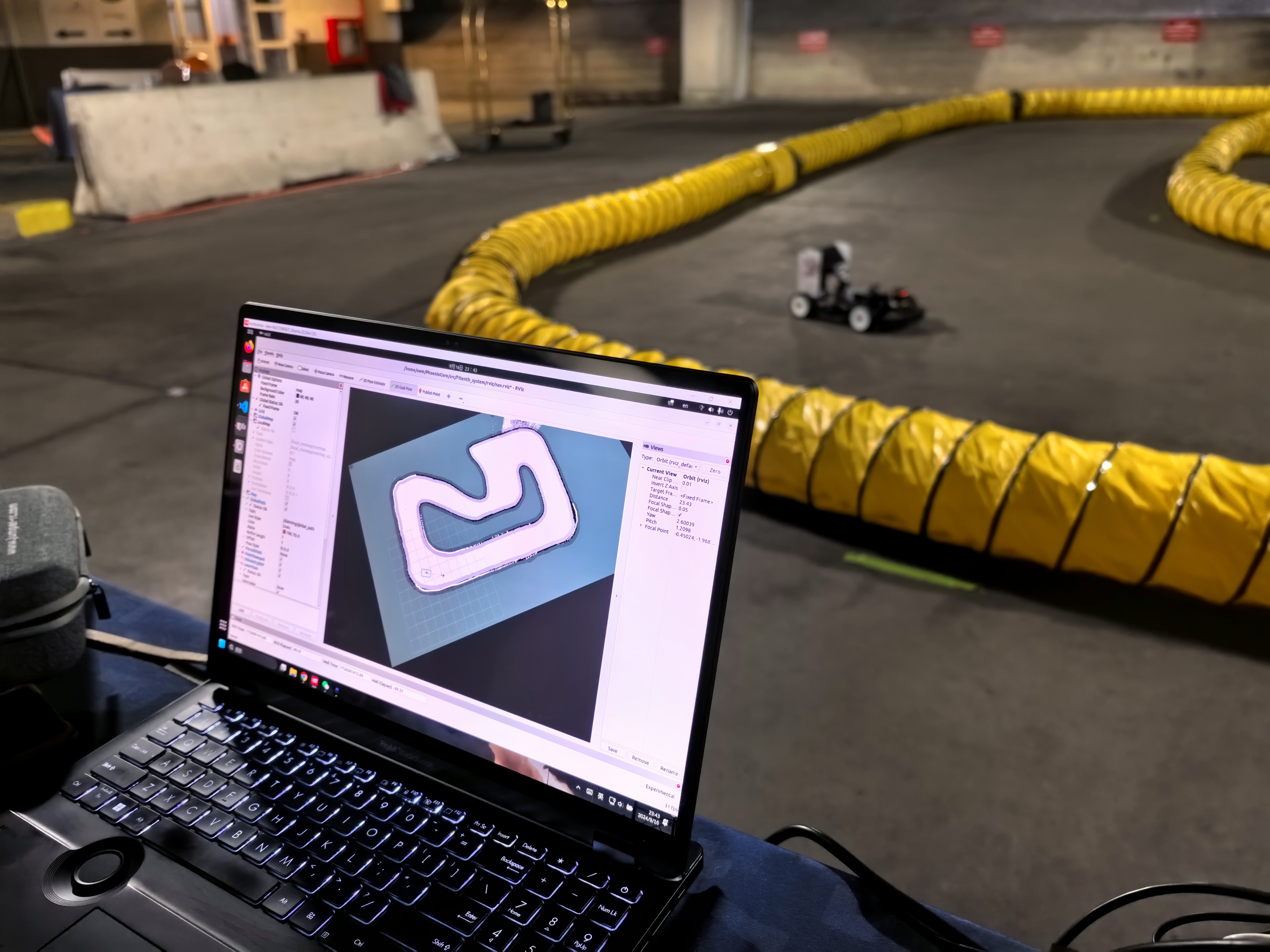
- LiDAR-based SLAM mapping generates a map of the track ahead of each run
- Pure Pursuit path tracking was chosen for its balance of simplicity and real-world performance, following a target point ahead of the vehicle along a precomputed trajectory
- Two separate tuned configurations were maintained: one optimized for outright single-lap speed, and one tuned for consistency across many consecutive laps
Solving Problems Under Competition Pressure
- Repeated crashes during pre-race testing caused progressively worsening braking performance, traced to an issue with the motor controller (VESC); a firmware downgrade partially resolved it
- A subsequent high-speed crash caused the onboard computer to fail completely; it was replaced with a backup unit and the software environment rebuilt from scratch
- Braking and speed limitations persisted even after replacing the computer, pointing to a deeper root cause
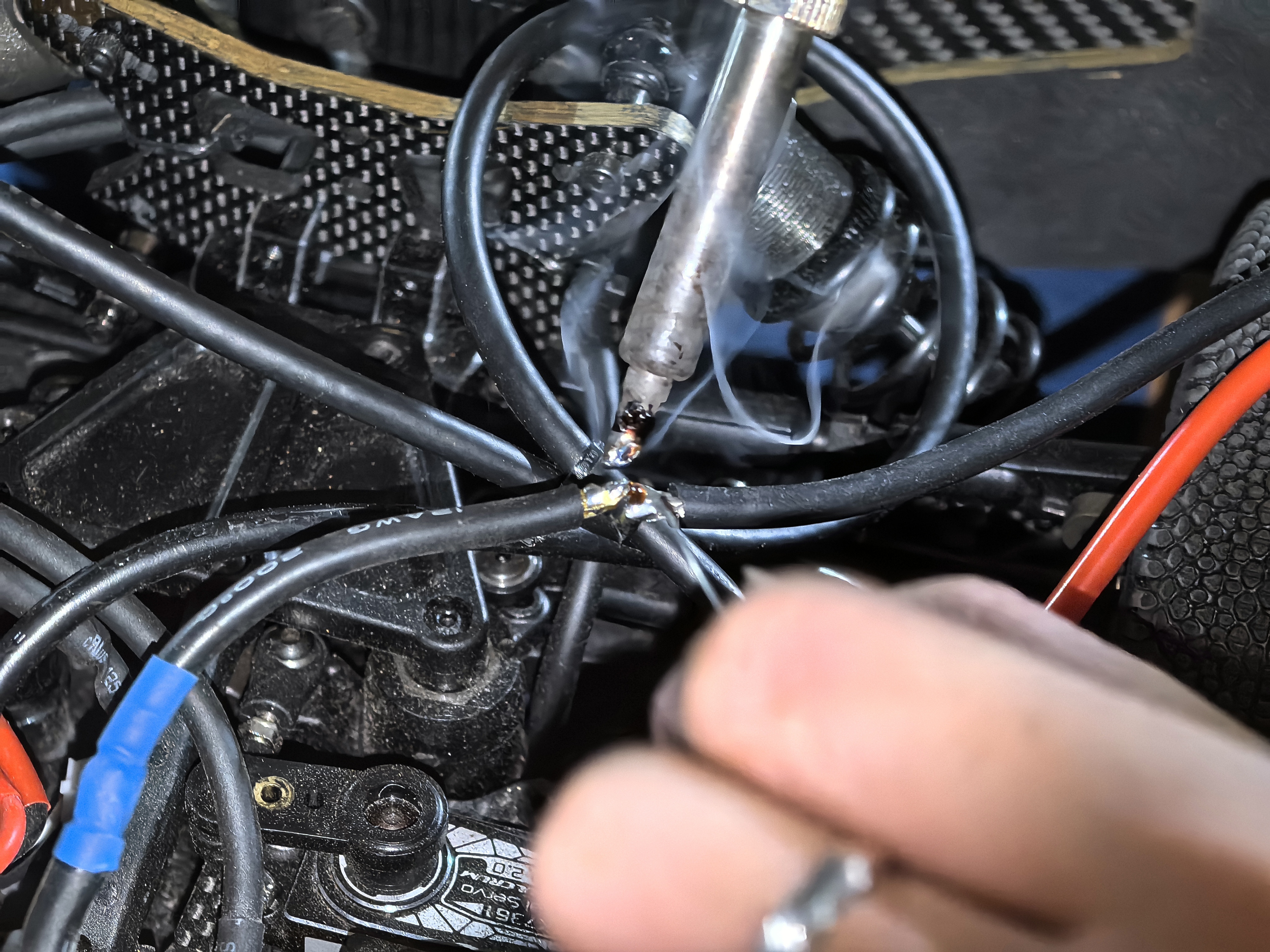
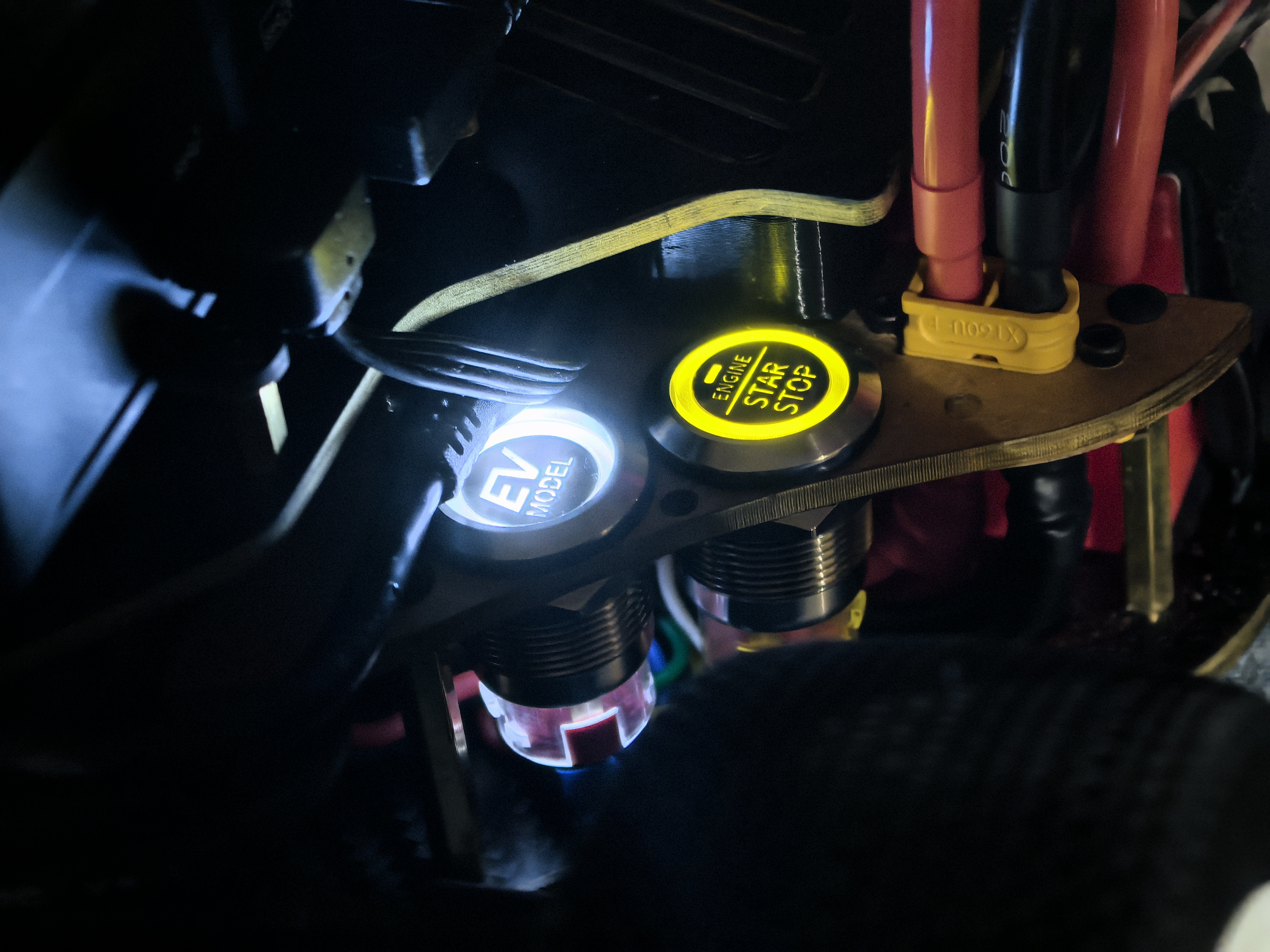
- The actual fault was ultimately traced to a faulty power switch; removing it and resoldering the wiring directly resolved both the braking issue and the speed limitation, more than doubling the vehicle's achievable speed
Results
- 3rd place overall at IEEE SM F1Tenth 2024, competing against 12 international university teams as the only high school team
- 2nd fastest single-lap time in the competition, at 9.18 seconds
- Nearly 3 seconds faster than the third-fastest team's lap time, a 39 percent margin
- Built for approximately $2000 per car, less than half the cost of the official competition chassis kit